

Riel Anniversary Highlights Khmer Rouge’s Money Ban and Lasting Impact on Cambodia
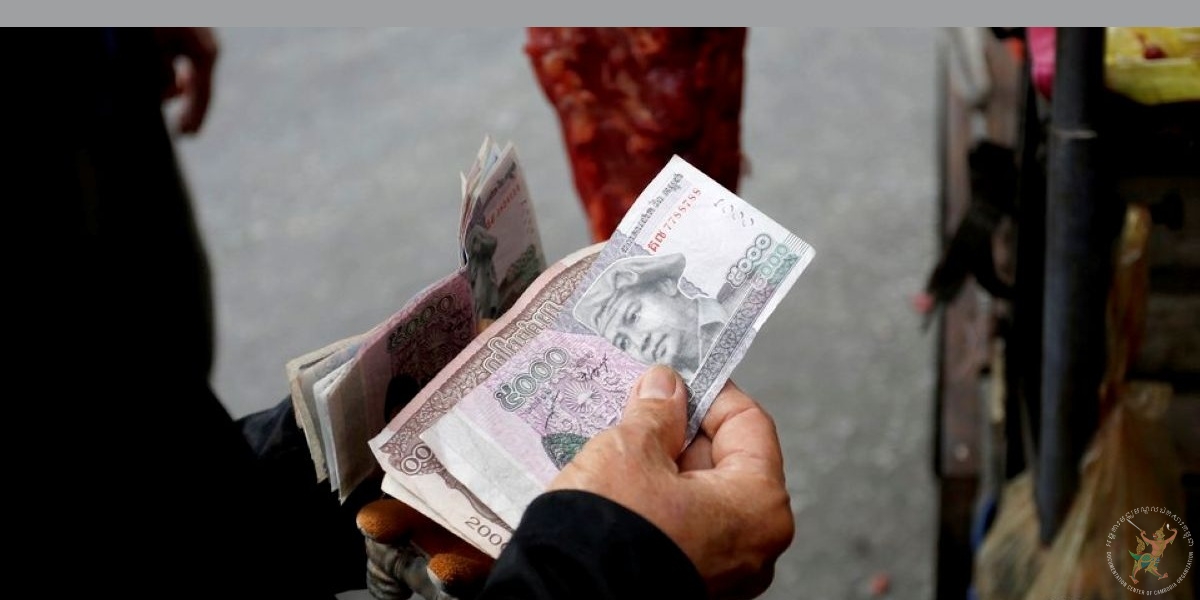
Cambodia has marked the 46th anniversary of the reintroduction of the riel. In a Q&A with Kiripost, Youk Chhang, Executive Director of the Documentation Centre of Cambodia (DC-Cam), said the Khmer Rouge abolished money to eliminate personal freedom and enforce total state control.
People depended entirely on the regime for basic needs, with strict control over resources and limited hidden trade. The impact was long-lasting, causing deep economic damage and generational psychological effects.
Q: Can you explain why the Khmer Rouge abolished money entirely when they came to power?
A: Money is an instrument for freedom and power, and the Khmer Rouge ideology did not want money to be available because it presented a risk to their strategy of achieving absolute monopoly over all power and freedom in society.
Even the smallest amount of money gives power and freedom to that person to make an independent decision on something, and this was unacceptable to the Khmer Rouge. Abolish money and you remove people’s power to make decisions on how the money is used.
Q: What did a “moneyless” economy look like in practice for ordinary Cambodians?
A: Theoretically under the Khmer Rouge, the state had a monopoly over all goods, services and property, so a moneyless society was built on simple exchanges, state prescribed forms of distribution and terror as the enforcement mechanism for the system.
Q: How did people survive and exchange goods without currency during this period?
A: When the state controls everything, the simplest act of receiving food for a meal, shelter and even personal time to rest were resources that could be granted or denied based on the whims of those people representing the state. Everything originated from the state because the state controlled everything, or at least this was the objective.
You could be given a meal if you worked hard that day. Or you could be given personal time to spend with your family if you were loyal to the regime. These are examples of how this worked in practice.
Q: Were there informal or underground systems of trade despite the ban on money?
A: The state attempted to control all forms of power, including economic activity; however, this was difficult to implement absolutely. In reality, the people who represented the state took advantage of their positions to exercise some autonomy over their personal matters and in some instances there were informal systems of exchange that arose because of this.
An example of this could be soldiers who bartered over simple items they were given. Villagers might do certain tasks or services in exchange for certain goods. Whereas the Khmer Rouge wanted to control everything, they just created the conditions for personal autonomy to become hidden.
Q: What were the long-term economic and psychological impacts of abolishing money on Cambodian society?
A: The long-term economic and psychological impacts are enormous. Cambodia suffered decades of economic reconstruction and the effects can still be seen today.
For example, Cambodians who survived the regime learned certain financial and economic habits, fears and predispositions that they passed down to the next generation. The impacts of the Khmer Rouge period are complex and will be multi-generational.
អត្ថបទទាក់ទង
![RTA [Royal Thai Army] Warns Cambodia may “Tremble” at New First and Se...](https://thekrsurvivors.news/wp-content/uploads/2025/10/600-ENG-150x150.jpg)
RTA [Royal Thai Army] Warns Cambodia may “Tremble” at New First and Se...
THE EVIDENCE DURING THAILAND’S AGGRESSION, 2025

"THIS IS A MARATHON AND NOT A RACE. AND THE THAI ARE JUST TRYING TO GE...
The future of peace depends upon the kind of strategic leadership offe...

Across Continents: The Importance of Personal Responsibility in Atroci...

“Color of Memory” Project Gives Hope to Cham Silk Weavers
PRESS RELEASE

“Color of Memory” Project Gives Hope to Cham Silk Weavers

HEALTH AND WELFARE OF THE SURVIVORS OF THE KHMER ROUGE
About The Author
